Weekly Macro Brief Ending March 30, 2026
-
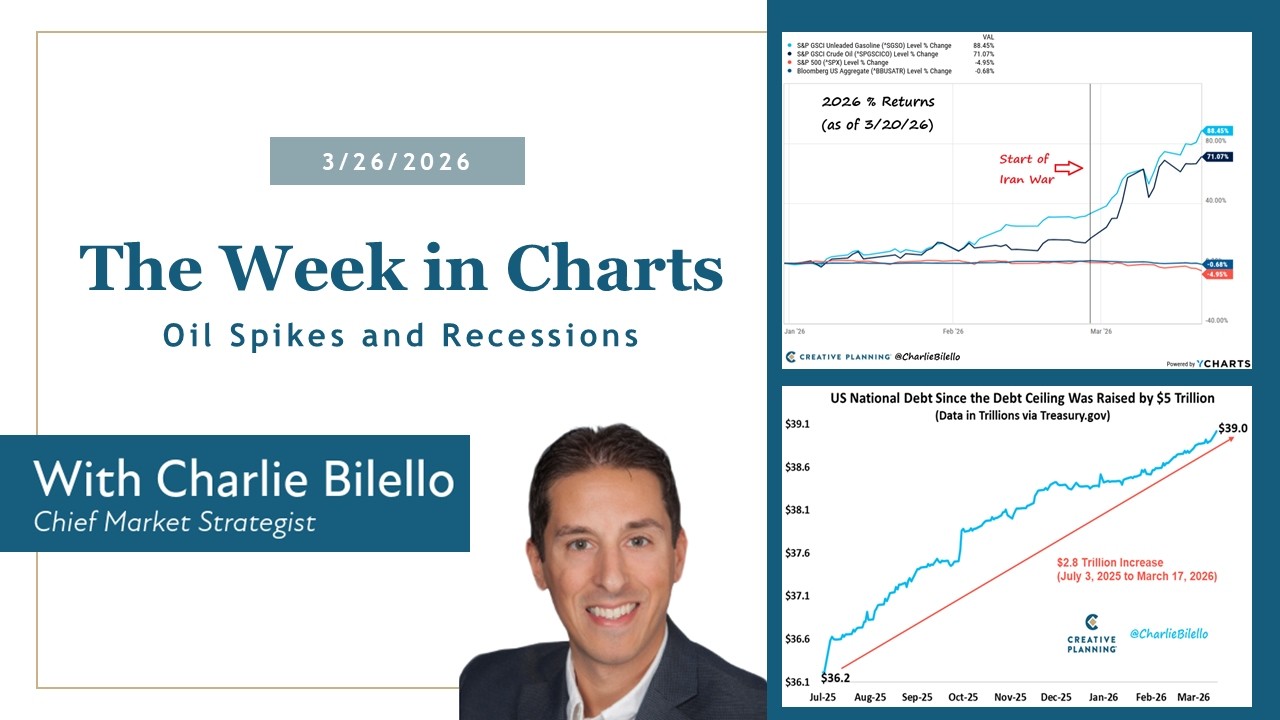
The inflation impulse has been re-energized, but it may still be temporary if de-escalation comes: BlackRock sees Brent at $112 and asks whether central banks can keep pace with inflation. Bilello stresses that higher oil, gasoline and fertilizer prices can feed into broader CPI and hurt the consumer if the shock persists. But J.P. Morgan Private Bank still thinks de-escalation is the more likely outcome, in which case European duration can work and energy prices could eventually fall back toward the oversupplied conditions that existed before the conflict. [BLK, CB, JPM-PB]
-
Fed hike fears look overdone, but “higher for longer” is real: The cleanest split across sources is this: J.P. Morgan Private Bank argues markets have overreacted by pricing Fed hikes, because long-run inflation expectations have not broken out and oil shocks historically tend to produce a hold, not a hike. BlackRock is directionally similar but more cautious, saying that if oil stays high, the question may shift from “can central banks cut?” to “can they keep up with inflation?” Bilello is more hawkish than both, highlighting a sharp move in market odds toward no cuts and even some hike probability. Net: the most likely path is a prolonged Fed hold, not immediate easing. [JPM-PB, BLK, CB]
-
Tariff pressure is fading at the margin, and that matters more for 2027 than for the next few months: J.P. Morgan AM’s key message is that the “tariff tide is receding”: struck-down IEEPA tariffs are unlikely to be fully replaced, lower tariffs should help reduce inflation later this year, and that could set up more meaningful Fed easing in 2027. Merrill broadly agrees that the feared post-“Liberation Day” collapse never arrived: margins held up, inflation failed to spiral, and trade was rerouted rather than broken. [JPM-AM, MER]
Sources:
https://mlaem.fs.ml.com/content/dam/ML/ecomm/pdf/CMO_Merrill_03-30-2026_ada.pdf