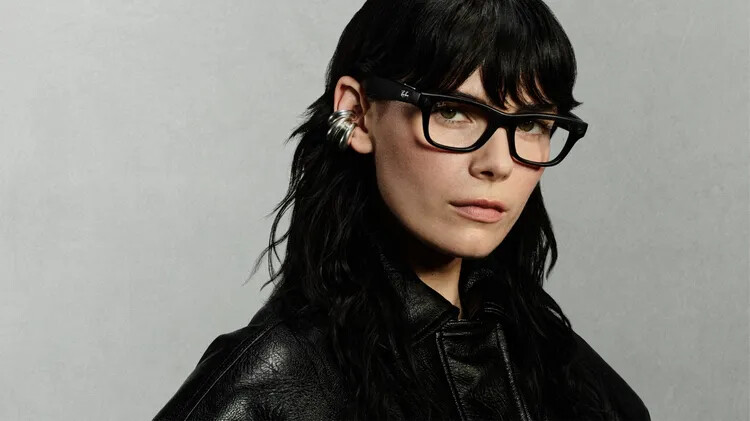
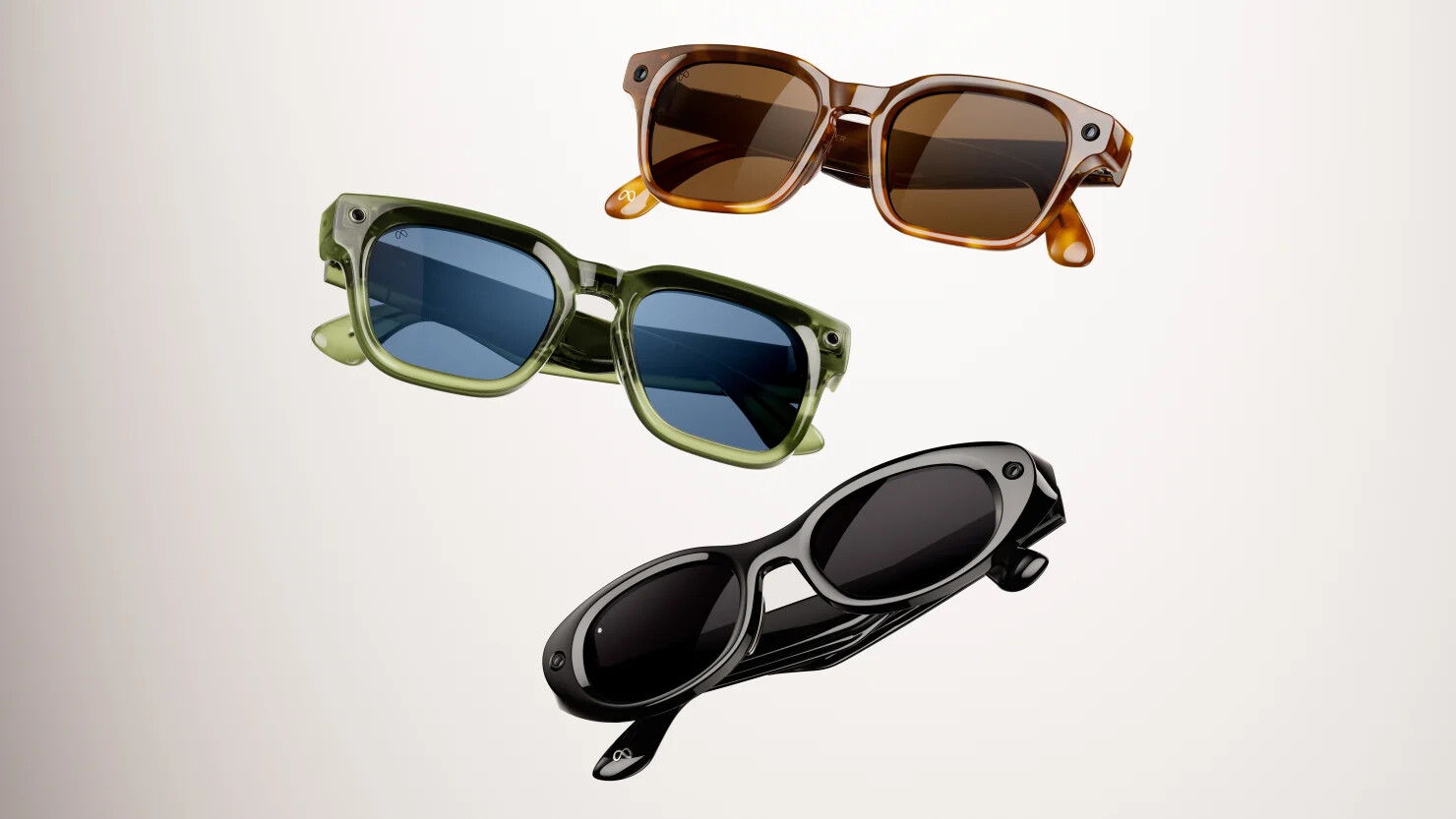
Meta invests $3.5 billion to acquire 3% stake in EssilorLuxottica, Bloomberg reported
Meta acquired around 3% of EssilorLuxottica, a stake worth around €3.5 billion at market prices and is considering increasing the stake to 5%, Bloomberg reported citing people familiar with the matter.
The deal deepens Meta’s commitment to smart glasses industry.
I=6
Meta debuts $799 Ray-Ban Display Glasses and 2nd generation of Ray-Ban Meta Glasses
At Meta Connect, the company debuted Ray-Ban Meta Glasses (Gen 2) priced at $379 (up from $279), offering double the battery life and resolution, more powerful camera (3K video), plus new features like “Conversation Focus” for amplifying voice and “Live AI” (min 37:13).
The “Live AI” feature, however, skipped steps during the live test and was blamed on wifi problem.
Meta also debuted Ray-Ban Display glasses for $799, featuring a high-resolution digital display (43 pixels/degree)- enabling you to watch videos and respond to text messages, and a neural wristband for hand-gesture control with 18-hour battery life and water resistance (min 50:00).
Like the “Live AI” feature, the Ray-Ban Display glasses live demo also experienced glitches.
Meta also launched the $499 Oakley Meta Vanguard, aimed at athletes, with 3K video, slow-motion capture, and advanced wind-noise reduction (min 44:00).
Zuckerberg also introduced Horizon TV, a new hub for watching shows, sports, and movies on Quest VR headsets (min 1:11:30).
Assessment
Bloomberg reported in April that Meta planned to release the display glasses by the end of the year. The fact that it’s debuting early shows that Meta continues executing well on the glasses front. However, I look forward to third-party tests on the performance of the wrist band, especially given the glitches it encountered during the live demo.
I=4 Meta CTO told employees they remain committed to Metaverse
“The priority of the metaverse work remains unchanged, and it continues to be a companywide priority,” CTO Bosworth wrote in the memo. “We’ve proved our thesis to the industry, and we continue to see competitors enter this space to try and catch up to us, so we need to continue to press our hard-earned advantage.”
I=6 Meta CTO Andrew Bosworth said robotics could be an “AR-sized bet”
Meta Platforms CTO Andrew Bosworth said at the end of September that their robotics investment could be an “AR-sized bet”.
Meta wants to focus on the software part.
“I don’t think the hardware is the hard part,” Bosworth said. “I’m not saying the hardware isn’t also hard, but it’s not the bottleneck. The bottleneck is the software.”
Bosworth pointed out that robots currently struggle with simple tasks such as picking a glass of water or grabbing a pair of car keys from a jeans pocket.
He said the robotics group is working with the new Meta Superintelligence Lab (MSL) to build a “world model” that can “do the software simulation required to animate a dexterous hand."
Nvidia CEO Jensen Huang predicted at CES 2025 that humanoid robots market could hit $38 billion in the coming decades.
Meta is said to have spent over $100 billion in AR and VR portfolio so far.
Bloombergreported earlier this year that Meta’s next big bet is AI-powered humanoid robots and that it is expected to hire 100 engineers this year.
Assessment
While the opportunity from humanoid robots is massive and is in line with Meta’s current focus on superintelligence, it represents capital and execution risk like in the case of Metaverse, especially now that that the company is going through a capital intensive period for AI. However, Meta could be planning to double down on it once it achieves superintelligence (since commentary on capital allocation has been largely on AI), which makes sense.
I=5 Meta’s Reality Labs poaches Apple’s most prominent design executive
Alan Dye, Apple’s most prominent design executive who has been in charge of the company’s user interface design team since 2015 will join Meta’s Reality Labs.
Apple confirmed the move to Bloomberg.
Dye will be Meta’s chief design officer in charge of design for hardware, software and AI integration for its interfaces and will report to Meta’s CTO Andrew Bosworth.
Billy Sorrentino, a senior director on Apple’s design team since 2016 will also join Dye’s team.
Dye’s departure comes after Apple’s new operating system called Liquid Glass, which makes makes menus and other parts of the user interface appear translucent, was heavily criticized for poor legibility.
Assessment
Meta Platforms reported Reality Labs losses of $13.2 billion in the 9 months ended September 2025 (page 8). Assuming loss of $18 billion in 2025, a 30% cut will translate to cost-savings of around $6 billion per year or around $2 earnings per share increase in 2026 (based on our 2026 base estimates).
The report could be true given the recent decision by Meta to move Metaverse’s vice president to MSL.
Meta plans to shift the Metaverse cost-savings to A.I. glasses and wearables, New York Times reported
The cost-savings from Metaverse will go to A.I. glasses and wearables, New York Times reported citing a Meta Platforms spokesperson.
“Within our overall Reality Labs portfolio we are shifting some of our investment from Metaverse toward A.I. glasses and wearables given the momentum there,” Nissa Anklesaria, a spokeswoman for Meta, said in a statement. “We aren’t planning any broader changes than that.”
Assessment
I think it would still be a welcome move given demand for A.I. glasses have exceeded supply in the most recent consecutive quarters (Notion-Q3 2025 Meta Platforms Earnings) and A.I. glasses appear to be one the ideal form of AI products.
I=6 Meta delays the release of Phoenix mixed reality glasses to first half 2027 from second half 2026, aiming to get the details right
In internal memos viewed by Business Insider, Meta plans to delay the release of Phoenix mixed reality glasses to first half 2027 from second half 2026, aiming to get the details right.
“There’s a lot coming in hot with tight bring-up schedules and big changes to our core UX, and we won’t compromise on landing a fully polished and reliable experience.”
Phoenix mixed reality glasses will look like Apple’s mixed reality glasses Vision Pro, will have a goggle-like form factor and will be connected to a puck to help power them.
Maher Saba, VP of Reality Labs Foundation, told employees that feedback from CEO Mark Zuckerberg indicate they need to make the business more sustainable and deliver more high quality experience.
The memos come after Bloomberg reported Meta is planning to cut Metaverse budget spend by 30%.
I=3 Meta delays international rollout of its Ray-Ban Display glasses due to high demand and limited inventory
“Because of this unprecedented demand and limited inventory, we’ve decided to pause our planned international expansion to the UK, France, Italy, and Canada, which was originally scheduled for early 2026,” Meta said. The company added that it will continue to focus on fulfilling orders in the U.S. while re-evaluating its approach to international availability.
Zuckerberg said in Q3 2025 earnings that that the Ray-Ban Display glasses sold out in almost every store within 48 hours of launching.
Launched in September 2025, Ray-Ban Display glasses cost $799 and allows users to take photos and videos, make phone calls, and listen to music as well as control the lenses using a wrist band.
I=5 Meta seeks to double Ray-Ban Glasses Output to 20 million or more in 2026
Meta Platforms and EssilorLuxottica SA are in discussion to double the output of Ray-Ban Glasses to 20 million or more by the end of 2026, Bloomberg reported citing people familiar with the matter.
This comes as Reality Labs division begins cutting 1,000 jobs with Meta’s CTO Andrew Bosworth saying they plan to double down on mobile devices.
I=6 Meta launches Meta Glasses costing $299, with AI powered by Muse Spark
Meta said the glasses are compatible with prescription lenses and will cost $299, around $80 cheaper than its entry-level second-generation Ray-Ban glasses.
The glasses also have a camera and personal speakers, and users can speak to Meta’s AI to translate or understand what they see around them, or take photos and videos of their surroundings.