I=9 Meta introduces Muse Wonder with “frontier capabilities”
Meta said the new model’s capabilities put it on par with OpenAI’s ChatGPT and Anthropic PBC’s Claude when it comes to coding, or working through financial or legal questions.
Meta AI Chief Alexandr Wang said in an interview that Meta has tried to differentiate itself from its competitors by focusing on big models for broad, consumer use cases.
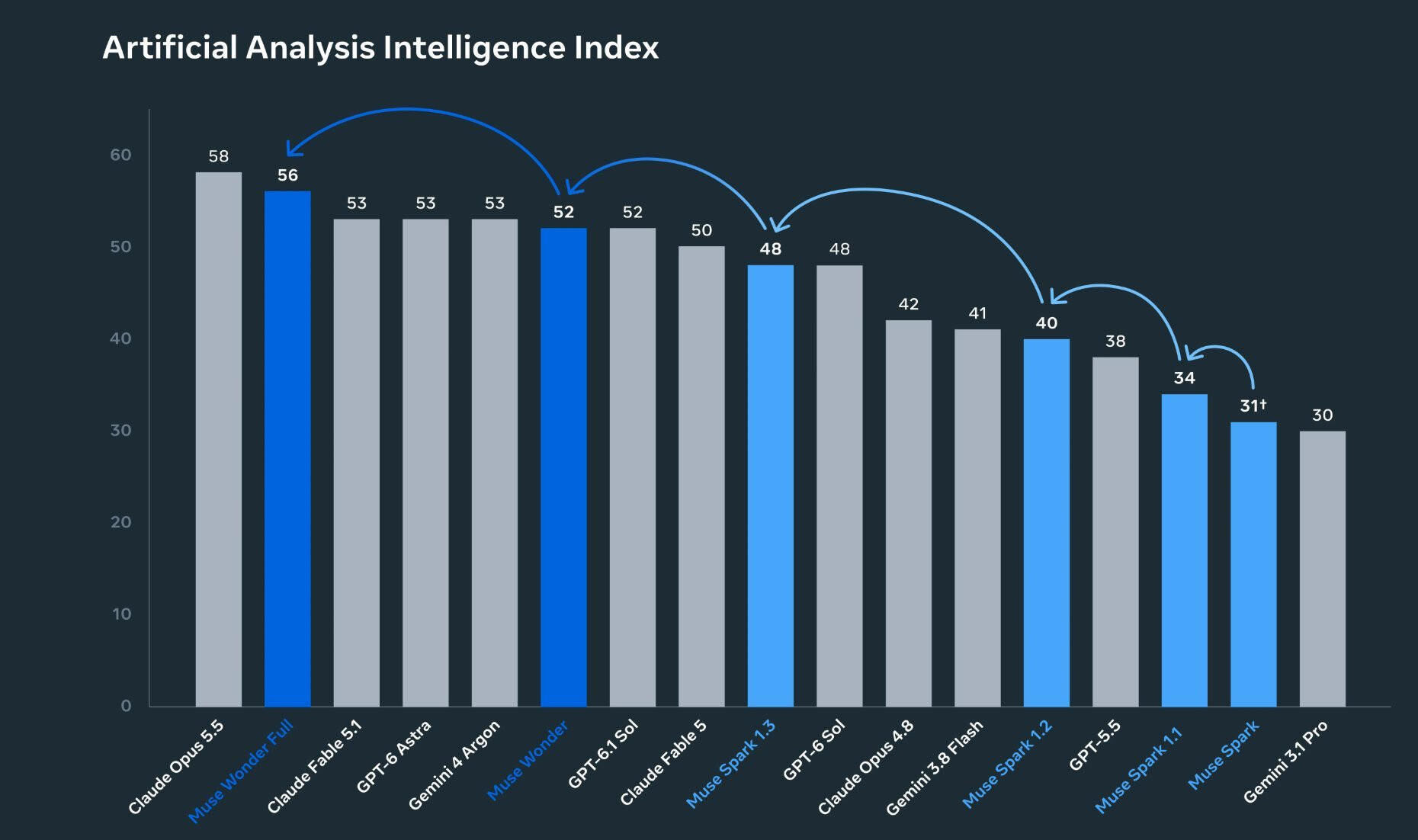
Muse Wonder Full ranks second after Claude Opus 5.5in Artificial Analysis Intelligence Index while Muse Wonder ranks fifth.
Muse Wonder Full ranks 5th on Vals Index, surpassing every OpenAI model.
Muse Wonder, internally code-named “Watermelon,” was released right on schedule.
I don’t like that Meta isn’t at the top of the benchmarks yet, but perhaps real-world performance matters more, especially when it comes to personal superintelligence, an area where Meta claims to be differentiated from its competitors.
I=5 Key Insights from Cheeky Pint’s Interview with Mark Zuckerberg and Alexandr Wang
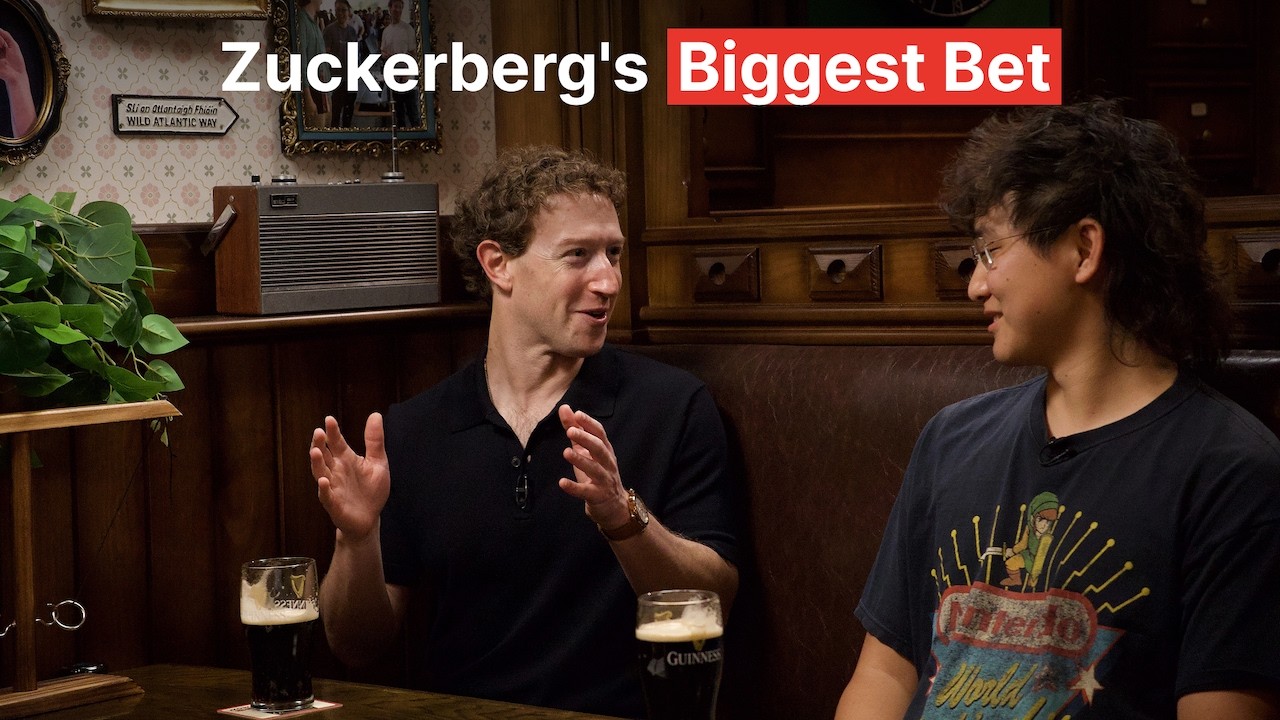
Zuckerberg said in Cheeky Pint Podcast that the time between each subsequent model will now start to compress since they are now at the frontier (min 14:35).
Wang said they have optimized their models for Muse and thinks that Muse Wonder is the best model in the world for the use case of personal professional agents (min 24:18).
Zuckerberg said they now care about internal benchmarks for the use cases they are focused on, rather than external benchmarks (min 25:03).
Zuckerberg said he was ready to bet as much as $200 billion on AI at the end of last year, and CFO Li wanted the person building it to understand what failure would mean (min 53:00).
Zuckerberg said they have way more businesses that want to integrate with Muse and very few that have tried to block it (Min 1:09:35).
Wang said more personalization through Muse is one of the exciting opportunities since the agent has the ability to understand you holistically (min 1:13:25).
Zuckerberg thinks AI agents will increase total addressable market for ecommerce and increase conversion rates by like 20% (min 1:15:58).
Zuckerberg thinks subscription will be a big business (min 1:27:00).
Zuckerberg pointed out that other than taking a fee from transactions, they will also likely monetize Muse by allowing business owners to use it in administration (min 1:27:00).
Zuckerberg pointed out that enterprise is also going to be a big business (1:29:50).
“Any effort by Meta to use A.I. data center expansion as eligible for research credits is potentially a significant misapplication of federal tax law that merits further investigation,” the letter, signed by a half-dozen other Democrats, said.
The New York Times reported two weeks ago that Meta saved $2 billion in 2024 and $3.9 billion in 2025 by claiming the credit for the data centers.
I=5 Meta’s Chief AI Officer, Alexander Wang, said he’s amazed at what scaling can do
“I am constantly amazed by what we can accomplish with scaling,” he said in a LinkedIn post. Sure, it’s a lot of work and a careful process, but we have built a scalable system to keep advancing at the frontier, and i am really proud of how fast this team keeps making these models better."
I=6 Meta’s Vice President Dina Powell McCormick said midterm results will make building data centers harder
Meta’s Vice President Dina Powell McCormick said midterm results will make building data centers harder, but is hopeful that some Democrats may be willing to negotiate.
“What I mean by that is to start new data center build-outs today in the United States will be very challenging.”
She said they are also considering building data centers in other countries, although Meta might have an easier time due to its track record.
“I can also tell you that every hyperscaler is now thinking about ‘Do we need to build outside the United States?’ Because they’re enormous investments, hedging those investments is a wise thing to do,” she said.
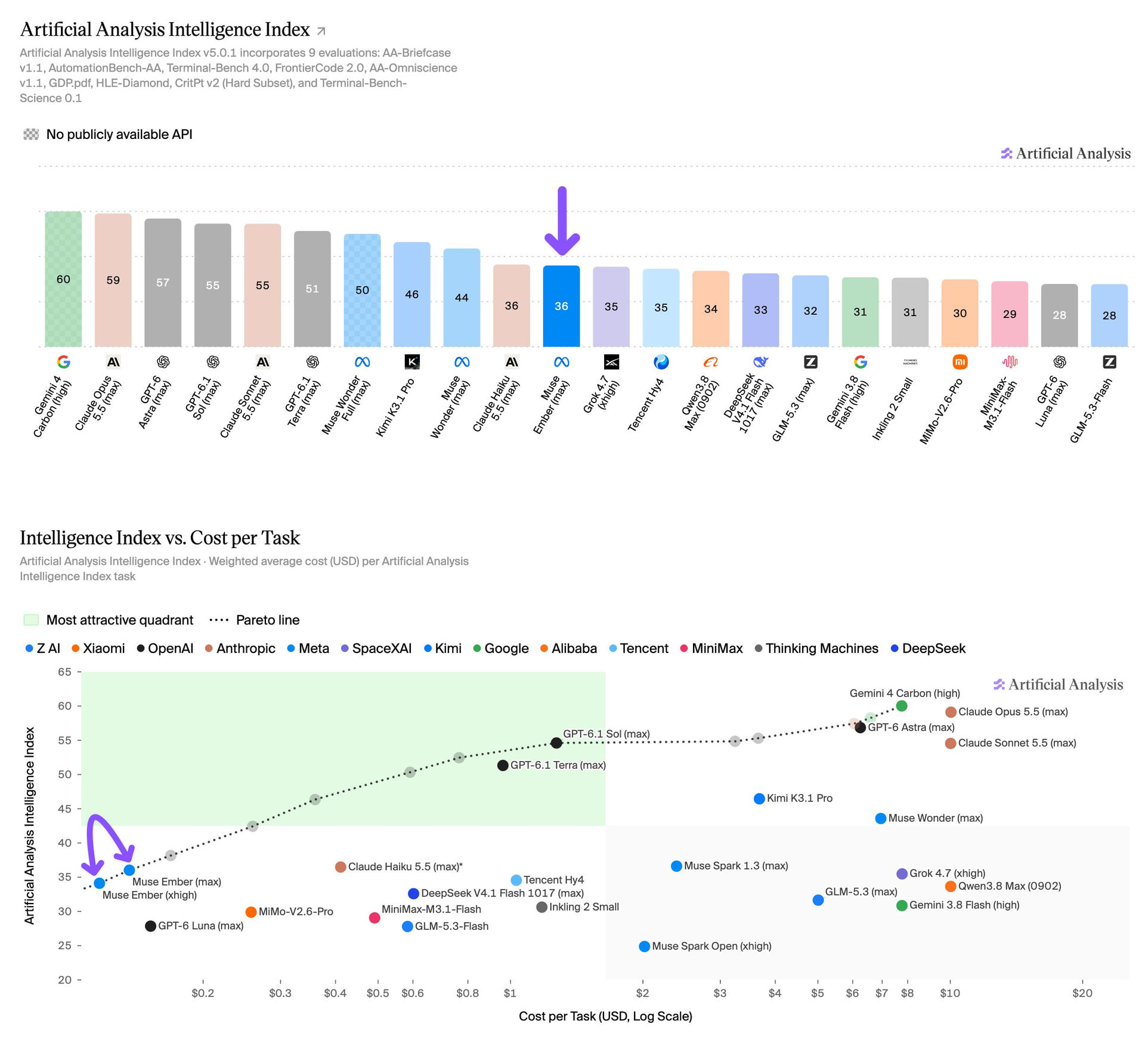
Meta said Muse Ember is “designed for complex reasoning execution and the work agents repeat all day: tool calls, coding subtasks, routing, extraction, and long document parsing.”
Meta said (citing Artificial Analysis Index) Ember is cheaper and smarter than competitors like Anthropic’s Haiku and OpenAI’s Luna.
Muse Ember looks less like a frontier-model play and more like a play for high-volume agent workloads. The tool-call, routing, extraction and document-parsing use cases map directly onto Meta’s messaging and ad products, where cost per call matters more than top-end reasoning. If the Artificial Analysis pricing comparison holds, it could make Meta’s internal agents cheaper and give its business APIs a competitive low-cost option. The adoption signal to watch is external developer usage, not just internal deployment.
I completely agree with your assessment of Muse Ember. By the way, I=6 indicates the importance rating. We use this rating system throughout the forum.