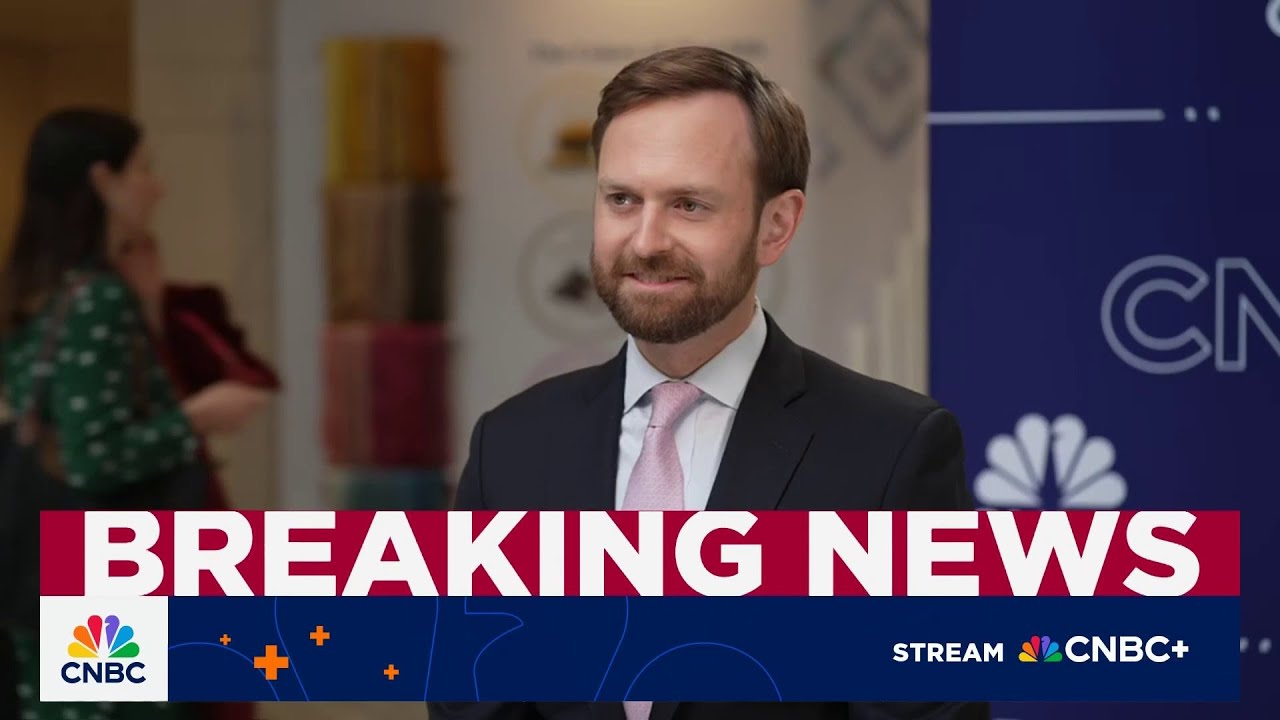
FTC Chair Andrew Ferguson confirmed there were settlement negotiations, said he thinks they are going to win
FTC Chair Andrew Ferguson said he thinks the case against Meta is going great and that they are going to win (min 3:59).
When asked if what they are doing won’t send a bad precedence for businesses, he says that Meta is different and that can be seen from what happened in 2020, where it showed how much power it has (min 4:55).
He confirmed that there were settlement negotiations but said he feels there is a need to see the case through for the American consumers (min 8:33).
“We had. It’s a big case. There’s always settlement negotiations. There were settlement negotiations. But I think it’s very important in order to protect American consumers that we see this case through. And that’s why we’re in the second week of trial,” he said.
“Settlement negotiations are always complicated, but my main goal was protecting American consumers. If that could be done with a settlement, that would be great. And if it couldn’t, we go to trial and we’re at trial,” he added.
Judge Boasberg signals openness to Meta’s argument on evolving user behavior
During an exchange with an FTC expert last week, judge Boasberg remarked that user behavior and online norms evolve over time. This comment may indicate that he is open to Meta’s core argument—that the social media landscape has changed significantly since Instagram and WhatsApp were acquired—and that competition today is broader than the FTC’s narrow market definition suggests.
Judge Boasberg declined to end the FTC case early, saying the FTC’s evidence was adequate to proceed under the law
Yesterday, judge Boasberg declined to end the trial early, saying the FTC’s evidence was adequate to proceed under the law.
In his ruling from the bench, he indicated that Meta had not shown an obvious fatal gap in the FTC’s case that would justify a judgment in Meta’s favor without fully hearing all evidence.
Meta had asked judge Boasberg to end the trial early since the FTC had failed to prove its accusations.
Assessment
While Judge Boasberg’s decision may indicate that the evidence presented by Meta has not enabled him to reach a conclusion, it could also suggest that he wants to ensure both sides have a fair opportunity during the trial. Therefore, this ruling may not necessarily inform his final decision.
FTC drops case against Microsoft’s $69 billion acquisition of Activision Blizzard, citing public interest
Yesterday, the FTC dropped a case that sought to block Microsoft’s $69 billion acquisition of Activision Blizzard in 2023.
“The Commission has determined that the public interest is best served by dismissing the administrative litigation in this case. Accordingly, IT IS HEREBY ORDERED that the Complaint in this matter be, and it hereby is, DISMISSED,” the FTC said in a statement.
Assessment
In my opinion, citing “public interest” lowers the downside risk for Meta if it were to lose the case since a break-up would be devastating to businesses.
The trial wrapped up at the end of May. Judge Boasberg will now review the evidence presented by both sides. The FTC and Meta are expected to submit post-trial briefs in September, so a ruling could come by the end of the year.
Boasberg will only determine whether Meta broke the law. If yes, there will be another trial to determine the remedies.
I reiterate my 60% probability of Meta winning the case, boosted by Boasberg’s openness to Meta’s argument that user behavior and online norms evolve over time.
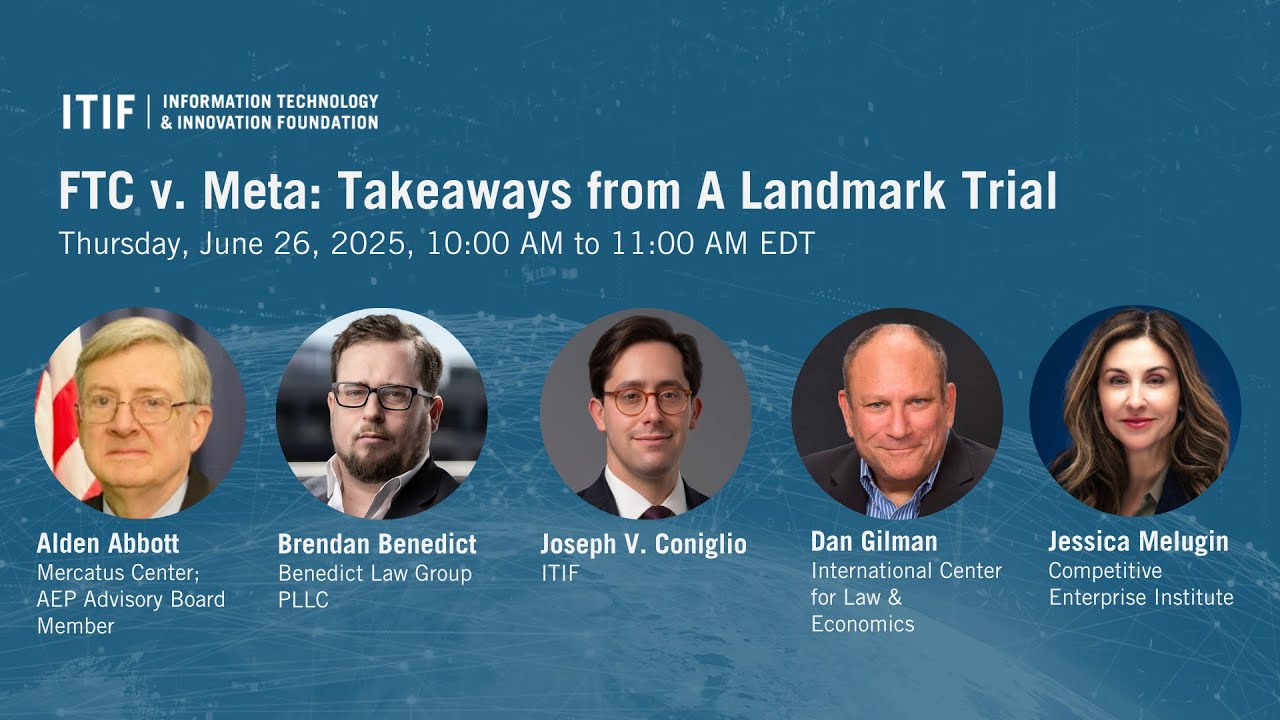
Panelists in the recent discussion below broadly agreed that the FTC’s case lacks strength.
I=6
Judge Mehta’s ruling against divestiture of Google’s Chrome and Android sends a positive signal for Meta’s FTC case
U.S. District Judge Amit Mehta ruled against the divestiture of Google’s Chrome Browser and Android Operating System, which were considered the harshest remedies.
In his ruling, judge Mehta said the Justice Department’s proposals went too far, including its request for divestiture of Chrome Browser.
“Plaintiffs overreached in seeking forced divesture of these key assets, which Google did not use to effect any illegal restraints,” Mehta wrote.
”But the complete divestiture of Chrome is a poor fit for this case. For one, the D.C. Circuit has instructed that “divestiture is a remedy that is imposed only with great caution, in part because its long-term efficacy is rarely certain.”
Mehta said the competitive dynamics are changing, largely due to AI.
Mehta also ruled that Google can still make payments to companies to preload products but it cannot have exclusive contracts.
Mehta said preventing Google from paying for distribution could cripple many other companies (such as Mozilla) and hurt consumers.
Alphabet shares are up 6% premarket following the ruling.
Assessment
The ruling sends a positive signal for the Meta-FTC antitrust case. Judge Mehta acknowledged that market dynamics are shifting, particularly due to AI. In Meta’s case, TikTok’s entry changed the competitive landscape, and Judge Boasberg appeared receptive to this argument during trial. Mehta also found that the Justice Department’s remedies went too far, reinforcing that a breakup of Instagram and WhatsApp would be difficult to achieve.
I=10 Meta wins FTC antitrust trial over acquisition of Instagram and WhatsApp
Judge James Boasberg ruled that Meta doesn’t hold monopoly power.
“With apps surging and receding, chasing one craze and moving on from others, and adding new features with each passing year, the FTC has understandably struggled to fix the boundaries of Meta’s product market,” US District Judge James Boasberg ruled (page 89). “Whether or not Meta enjoyed monopoly power in the past, though, the agency must show that it continues to hold such power now. The Court’s verdict today determines that the FTC has not done so."
Boasberg ruled that TikTok is Meta’s fiercest competitor.
“Today, that app holds center stage as Meta’s fiercest rival,” he wrote.
The decision was expected though the ruling interrupted a sell-off in Meta in Meta stock for a few hours.
FTC said it will appeal the ruling which declared Meta is not a monopoly in November 2025.
According to a Bloomberg source, the FTC believes judge Boasberg incorrectly examined the current competitive conditions
Assessment
It’s not uncommon for the Court of Appeals to dismiss past court rulings brought by the FTC. For instance, in 2008, the FTC won in the Court of Appeals against a court ruling which had indicated Whole Foods’ acquisition of Wild Oats was not anti-competitive (FTC-Meta Antitrust Trial (Notion)). As such, I think re-assessing the topic in the coming days is crucial.
I=6 A judge ruled against breakup of Google’s ad business
A federal judge in Virginia rejected U.S. antitrust regulators’ attempt to force Google to sell its online advertising exchange.
U.S. District Judge Leonie Brinkema in Alexandria, Virginia, declined to order Google to divest AdX, its online advertising exchange where publishers pay Google a 20% fee on real-time ad auctions, but approved most of the proposed behavioral remedies.
In April 2025, Brinkema ruled that Google illegally monopolized the publisher ad-server and ad-exchange markets.
Assessment
This ruling sends another strong signal that a forced divestiture of Instagram and WhatsApp is unlikely, even if the FTC succeeds in its appeal against Meta in its monopolization case. Another judge also ruled last year against divestiture of Google’s Chrome and Android, citing rising competition from generative AI.